The same business, re-sequenced around the buyer.
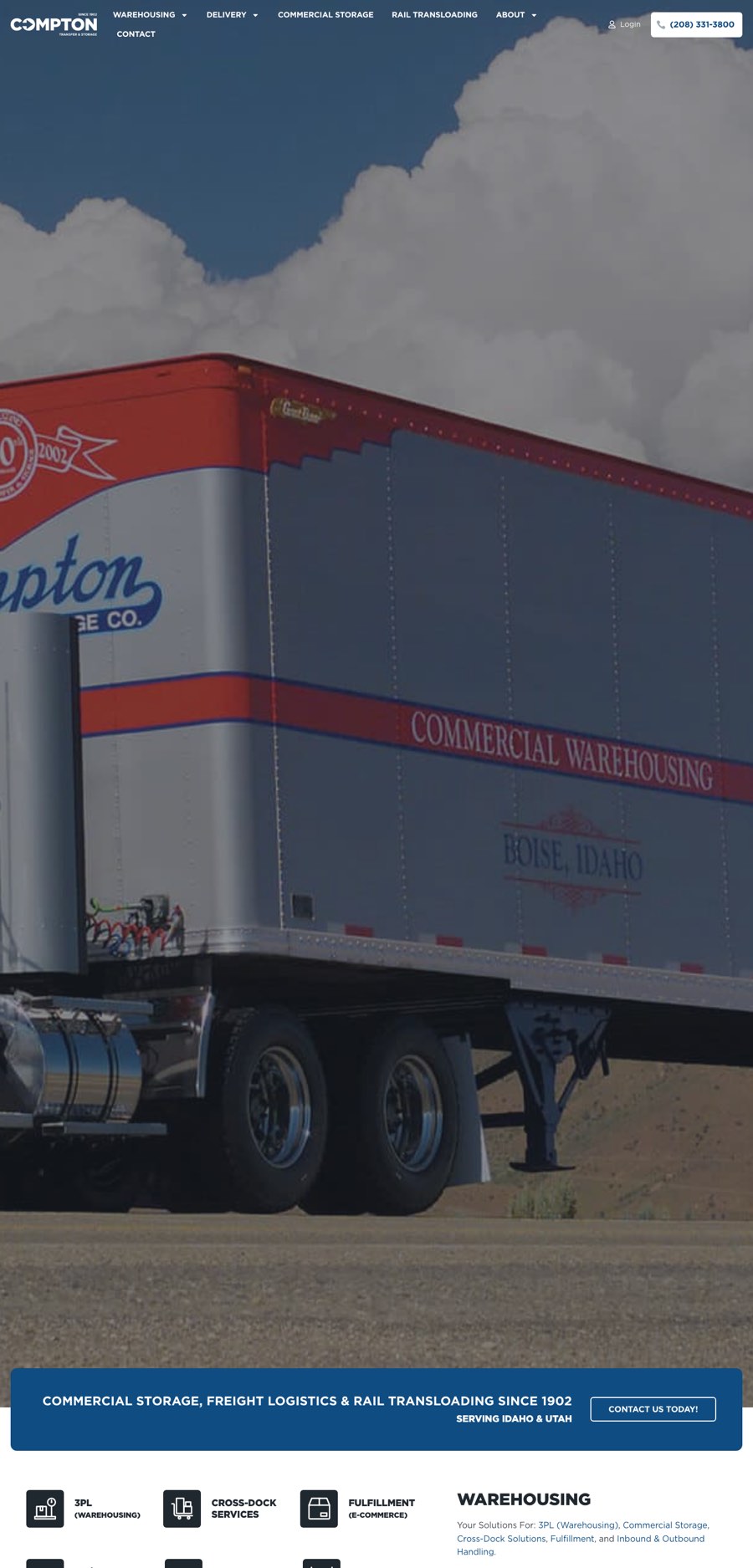
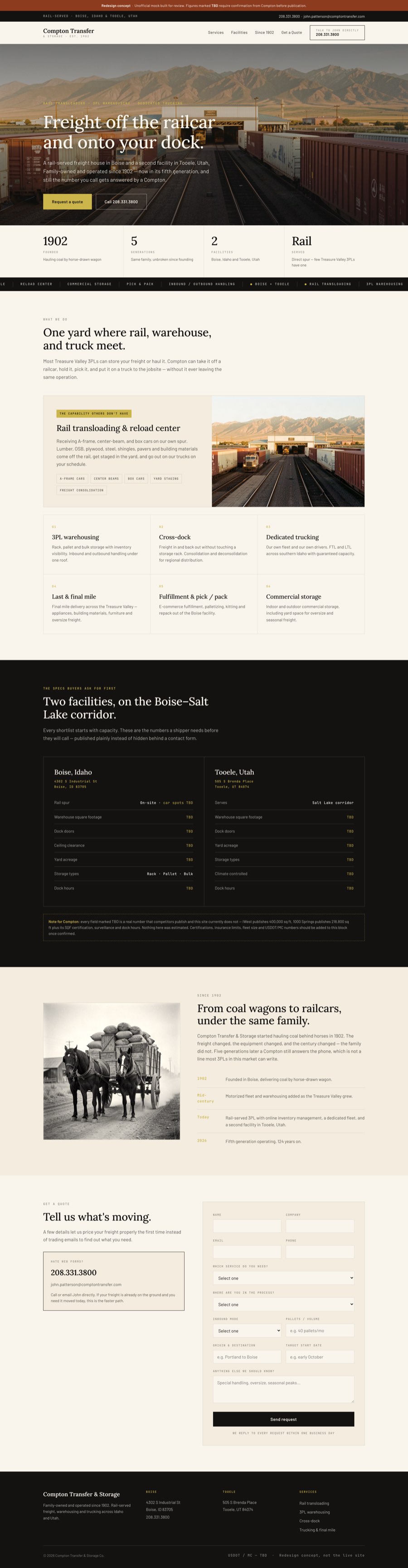
Left is the live site as it renders today. Right is the proposed mock. Nothing on the right invents a capability — the heritage, the two facilities and the rail service are all Compton's own published facts. Figures Compton has never published are marked TBD rather than guessed.
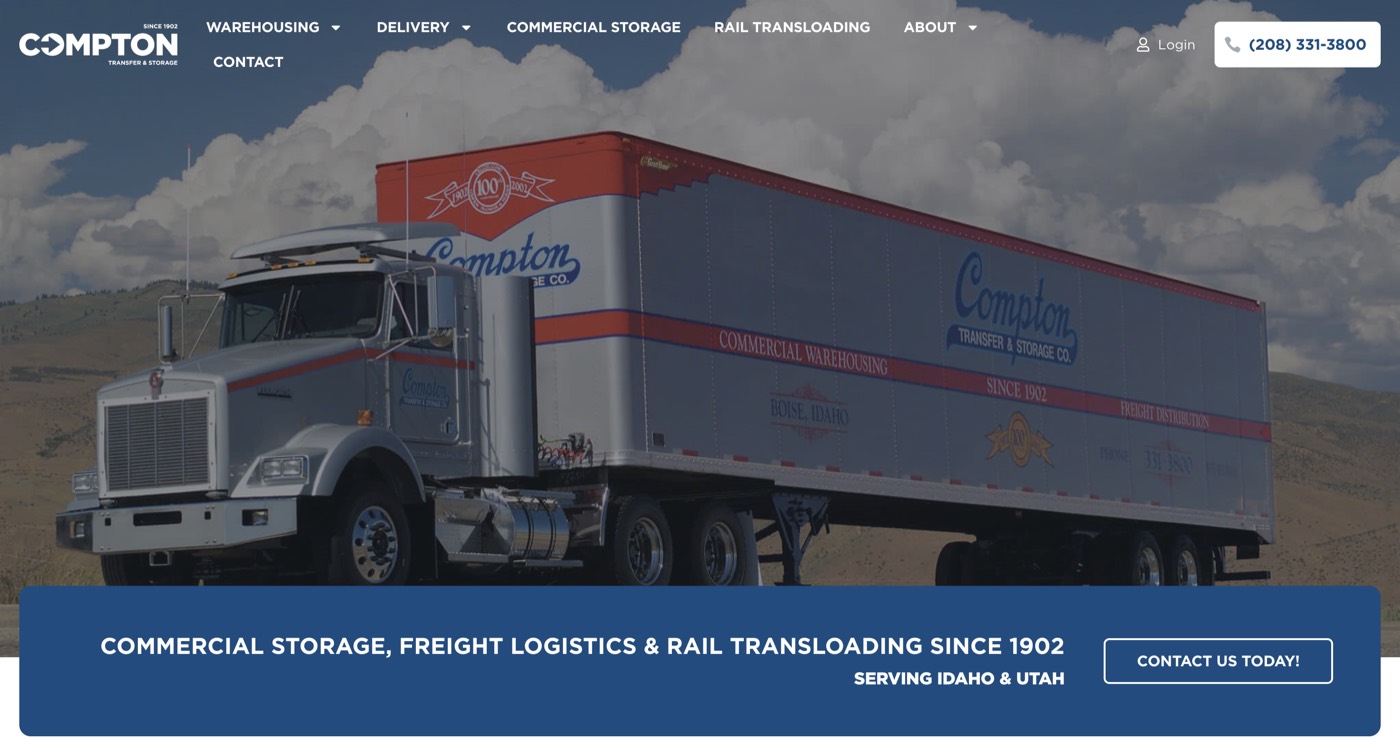
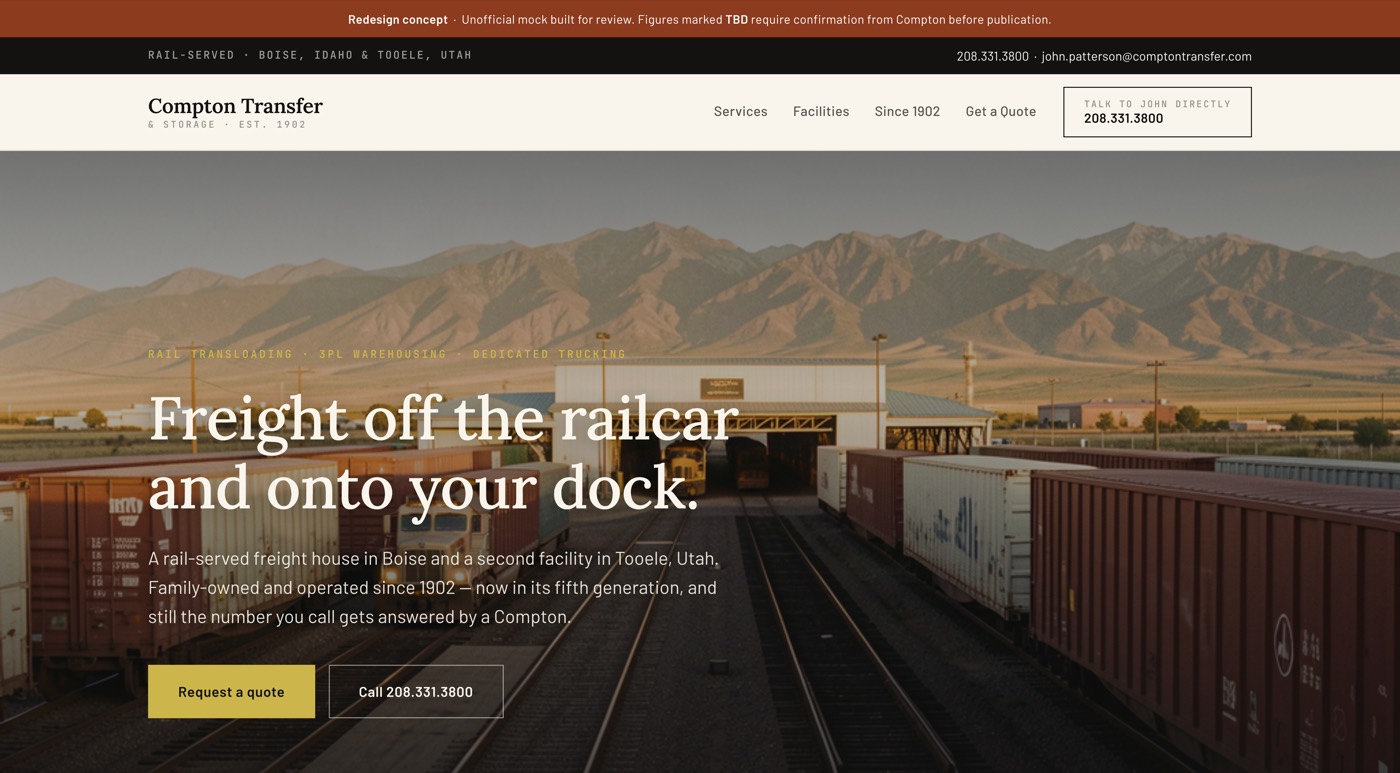
The hero: company name vs. what you actually do
The live H1 is the company name, while the real positioning line — “Commercial Storage, Freight Logistics & Rail Transloading since 1902” — is demoted to an H3 inside a blue bar. The mock promotes the differentiator to the headline and puts a stat row directly beneath it: 1902 / 5 generations / 2 facilities / rail-served. All four are Compton's own claims, lifted from their About page and contact block.
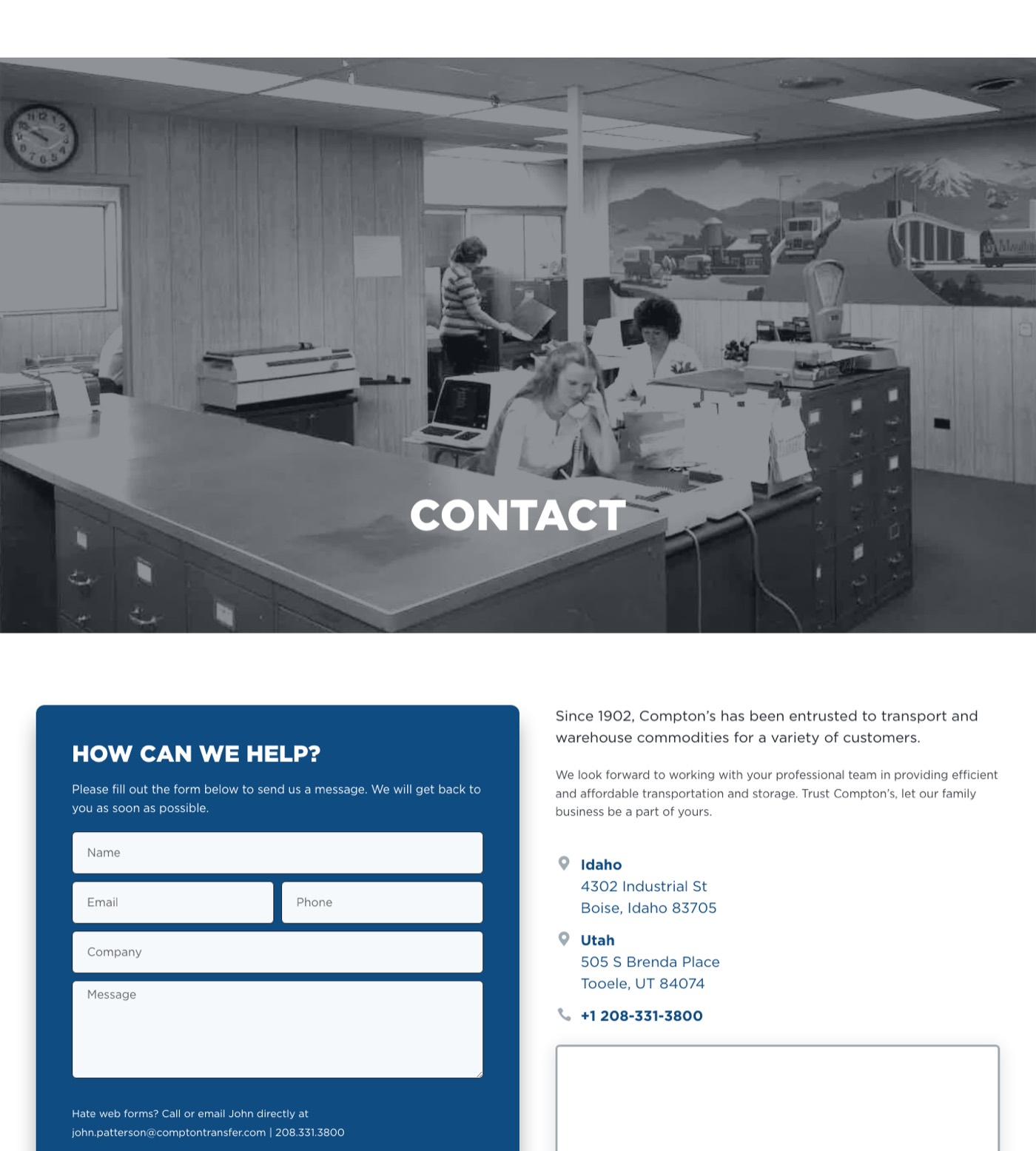
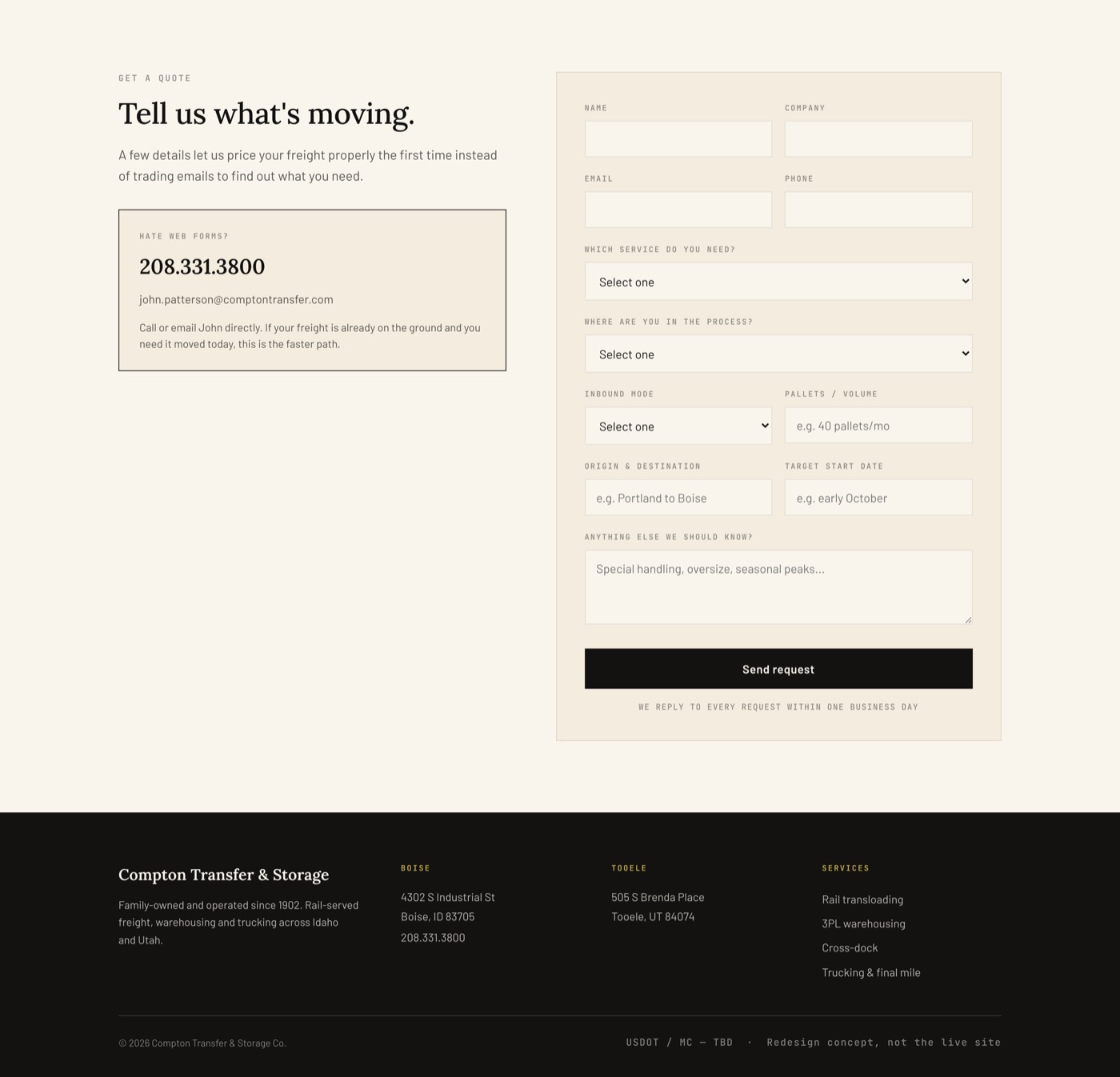
Contact box vs. a quote path that qualifies
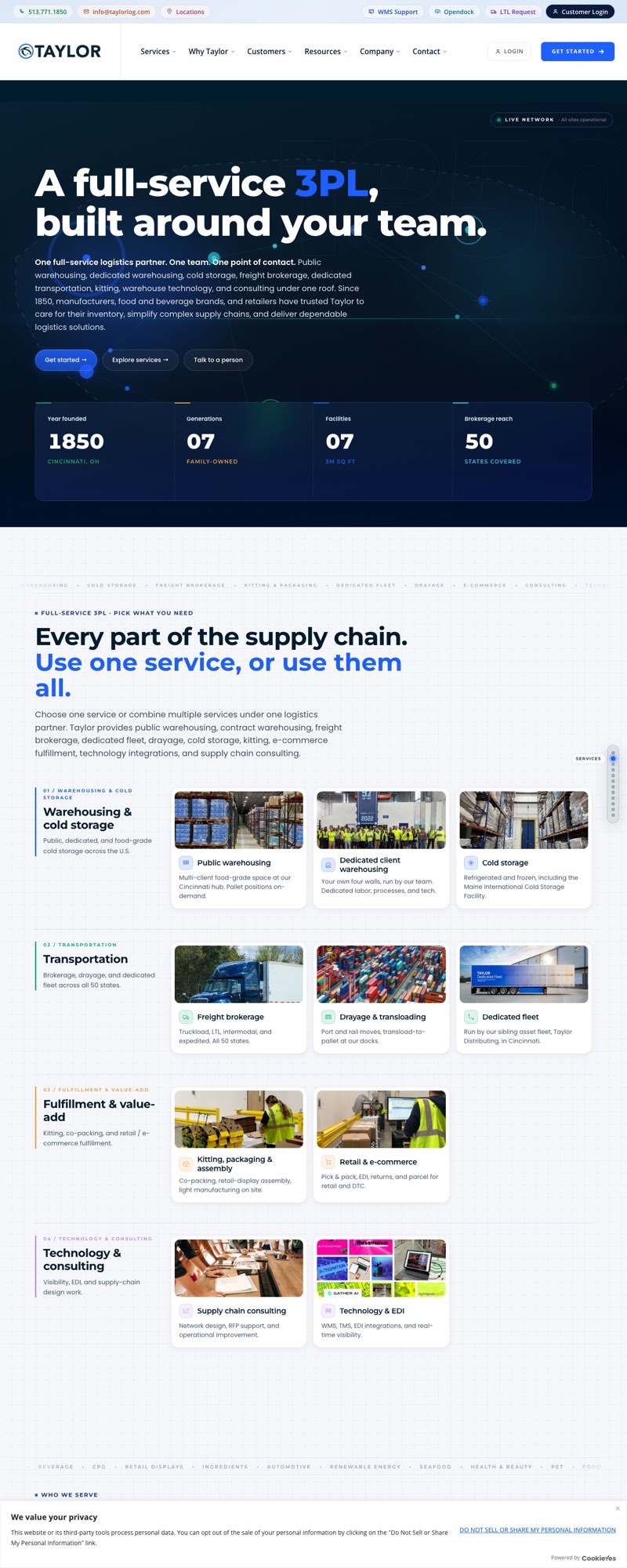
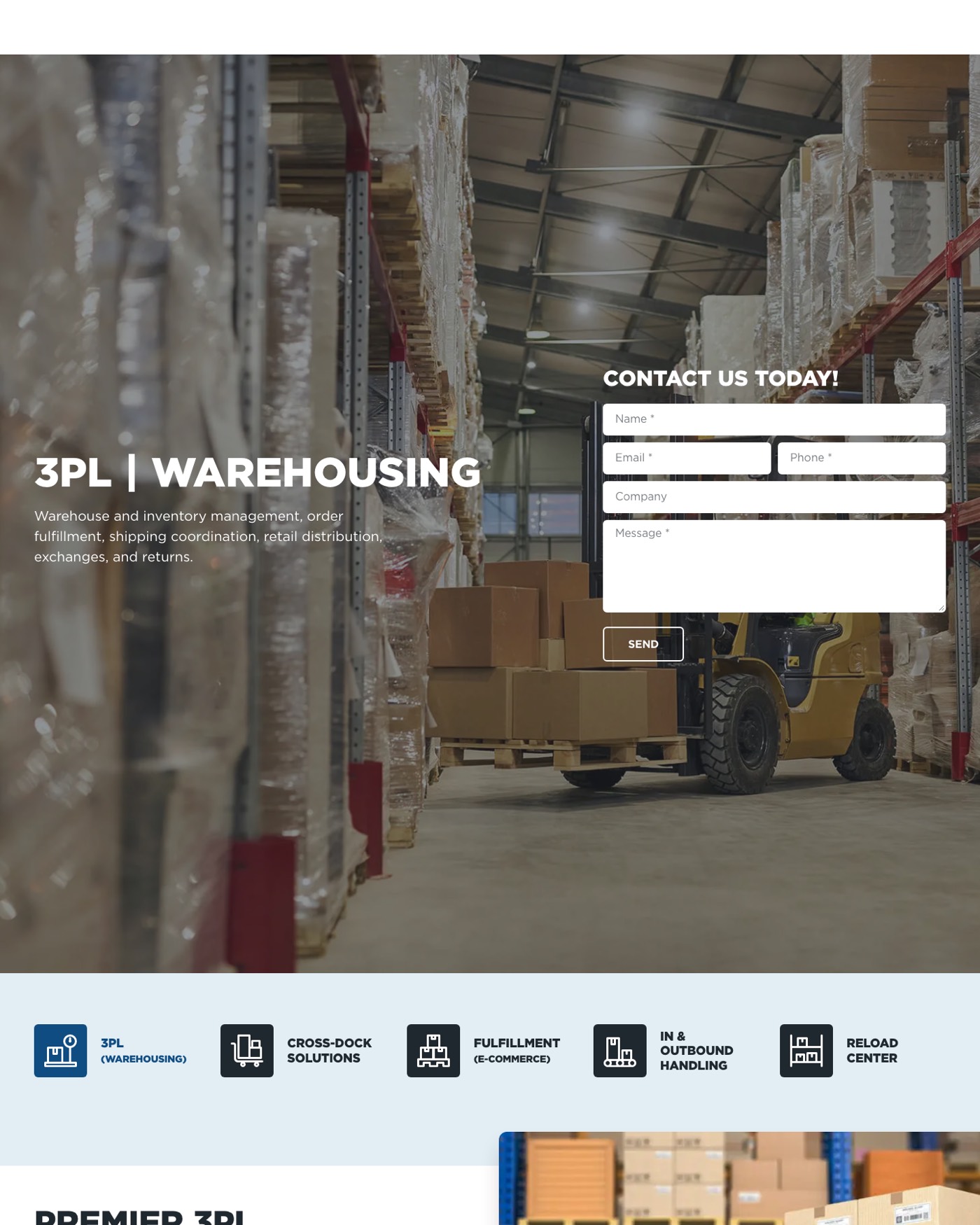
This is the highest-weighted dimension and the lowest score, so it is the single change worth the most. The live form asks for name, email, phone, company and a free-text message — it cannot tell a 40-pallet inbound from a tyre-kicker. The mock asks what is moving, which service, how it arrives, volume, timeline, and where the shipper is in their process, then promises a reply within one business day. The “where are you in the process” select is borrowed directly from Taylor Logistics.
Five equal cards vs. leading with the moat
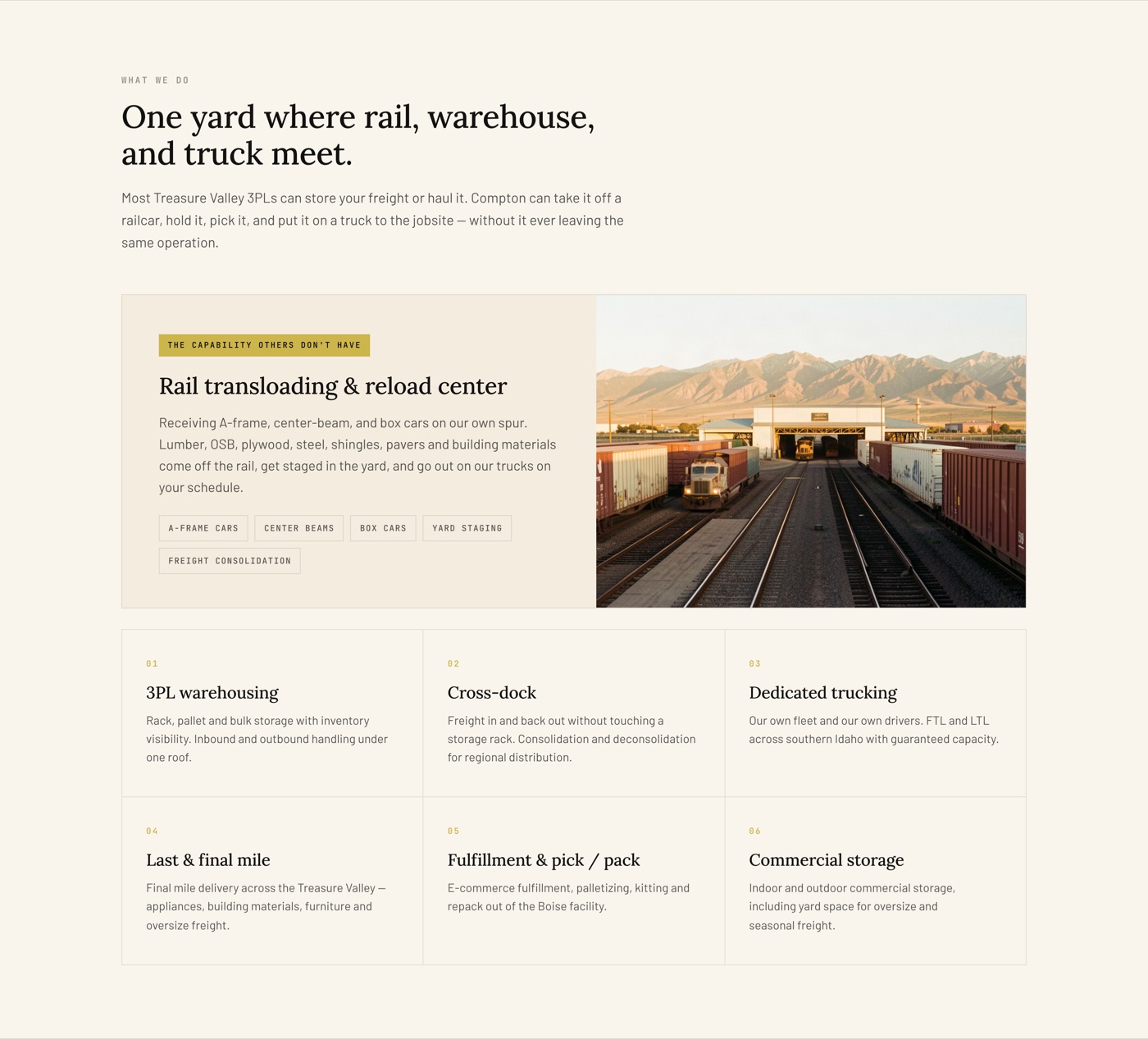
On the live site, rail transloading — the one service that is a genuine competitive moat and the one Compton already ranks #1 for — is styled identically to the other four services. The mock gives it primary weight and writes each service around the shipper's problem rather than the internal department name.
The section with no “before” to show
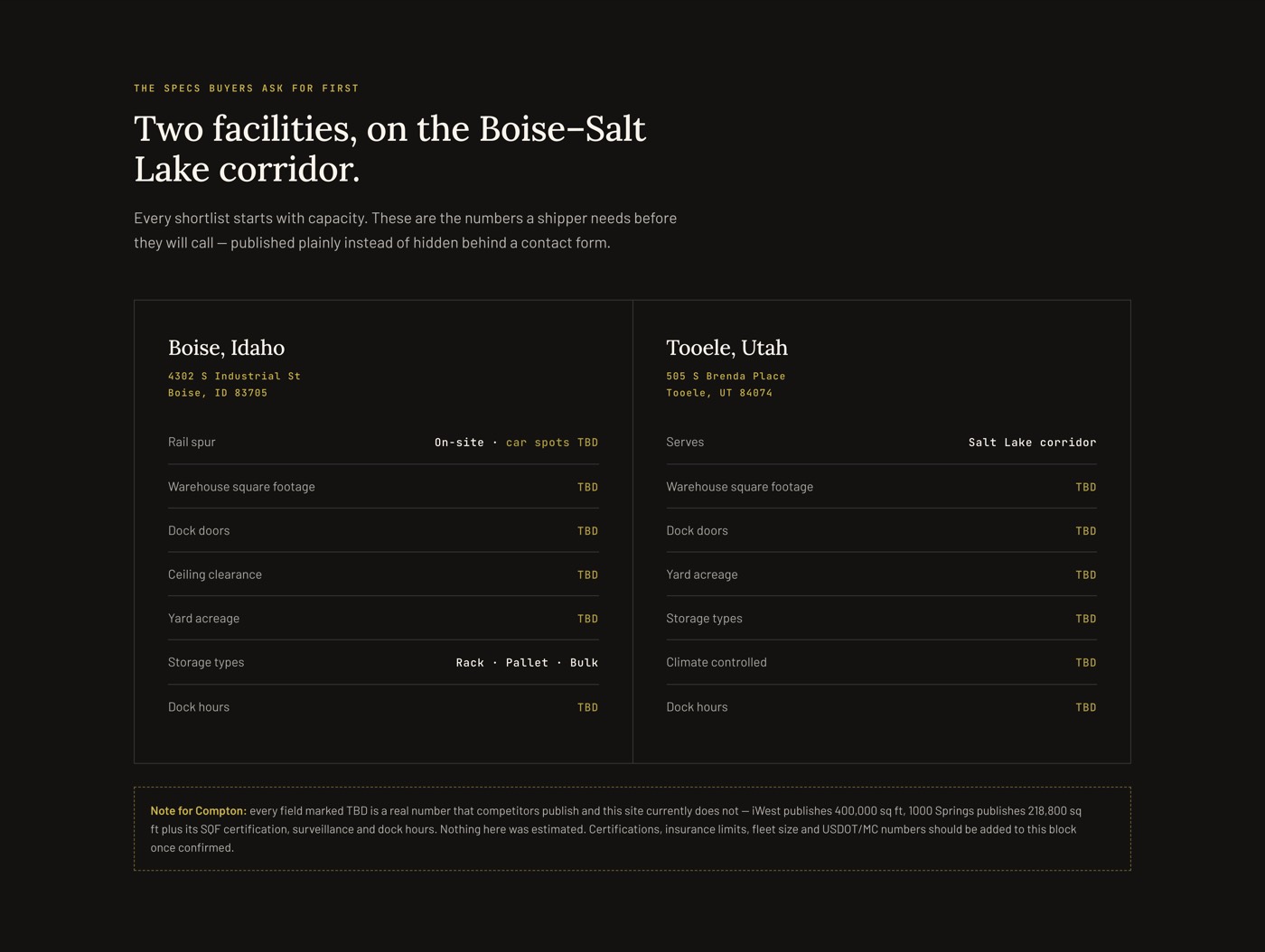
There is no live counterpart to place beside this one, and that is the finding. Compton publishes no facility specification anywhere on its site, and no Utah page exists at all. The mock builds the block its competitors already have — and every figure Compton has never published sits behind a visible TBD, because this block is only worth shipping if the numbers are confirmed as real.
No facility page, no specification block, no square footage, no dock count, no
certifications. /utah/ and
/tooele/ both return 404 while the
Tooele facility operates.
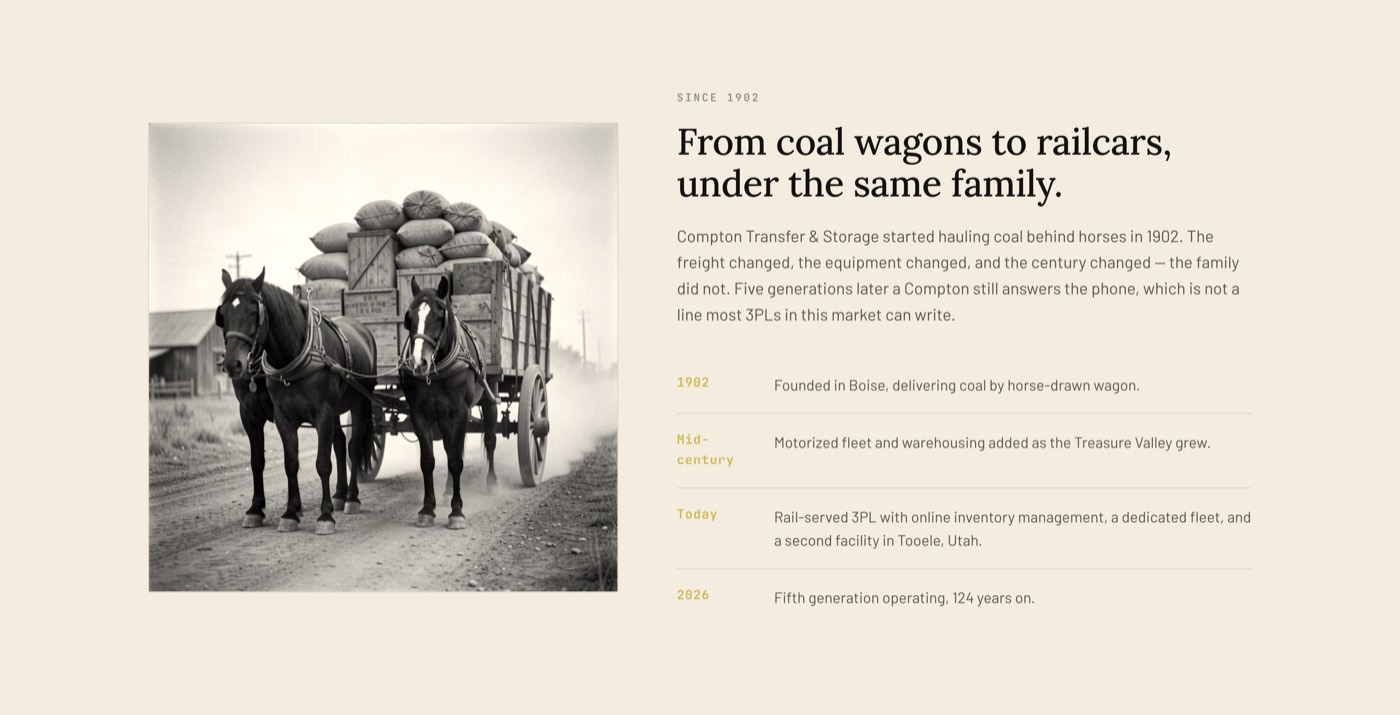
A paragraph of heritage vs. the asset it actually is
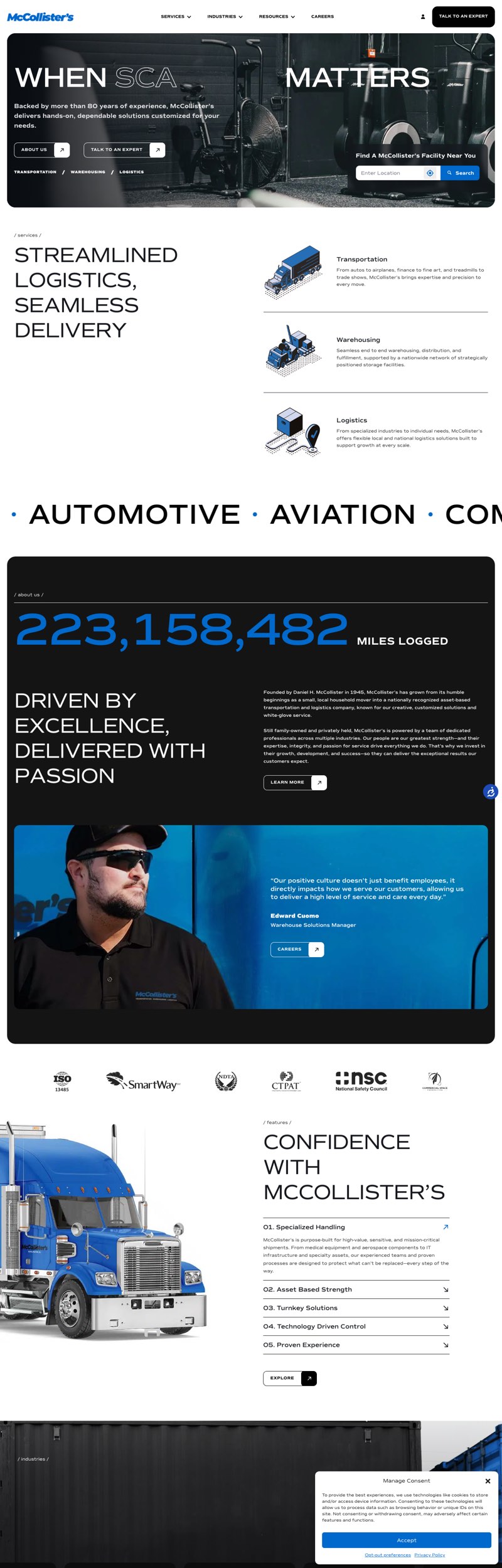
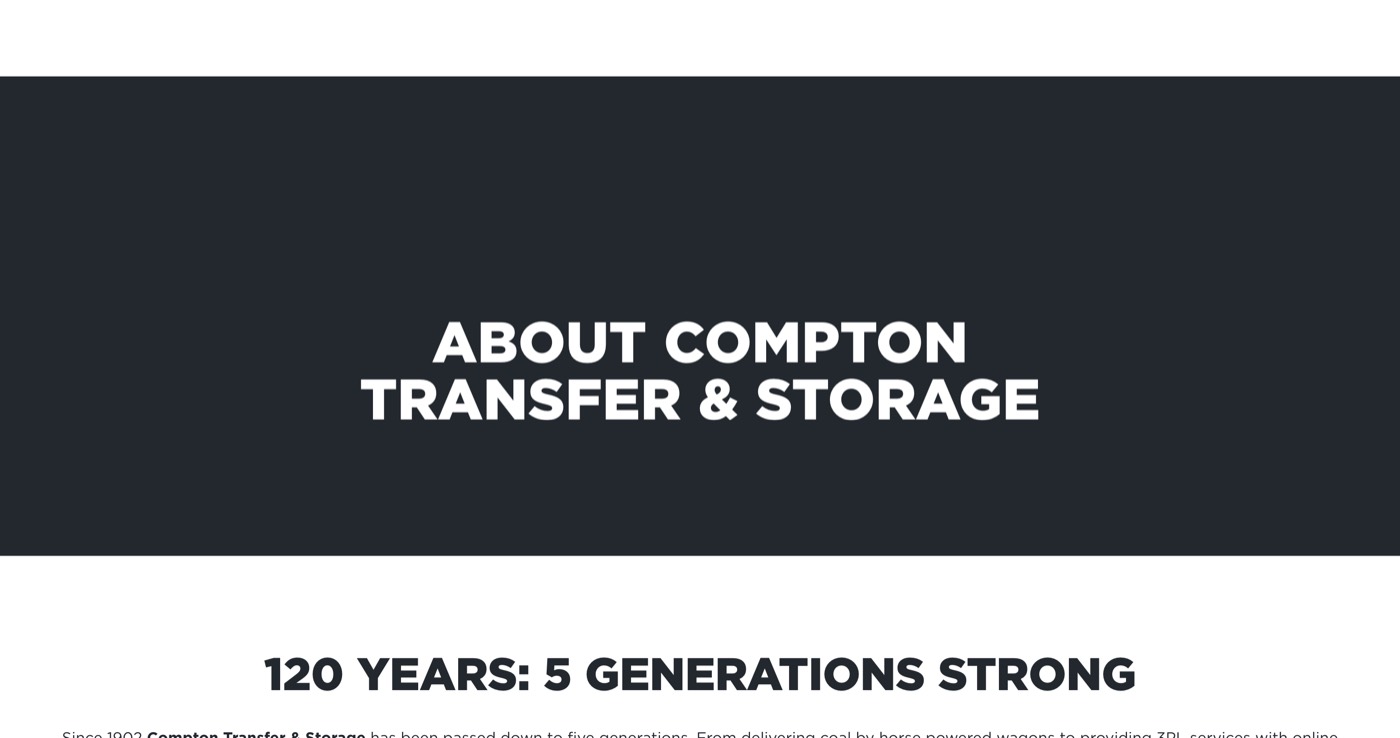
124 years and five generations is a differentiator almost no competitor can match, and on the live site it is one paragraph on an interior page. The mock gives it a section and treats it the way Meritex treats its own 1907 origin story — as proof of durability a freight buyer can weigh, not as decoration.
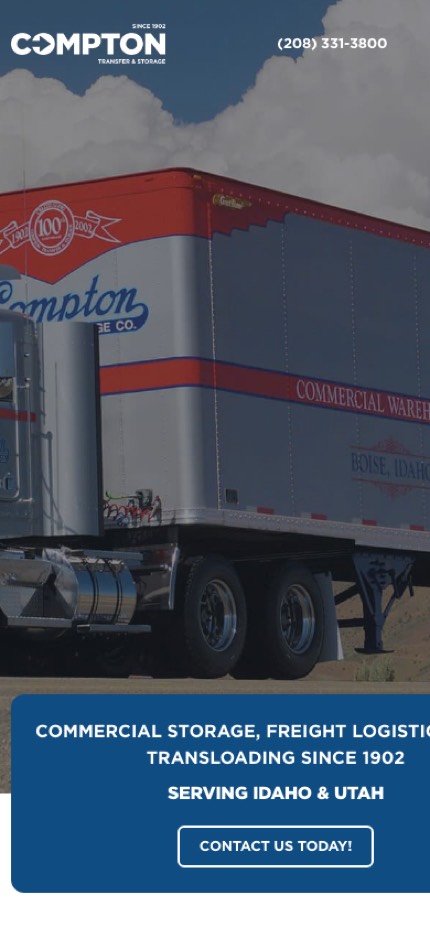
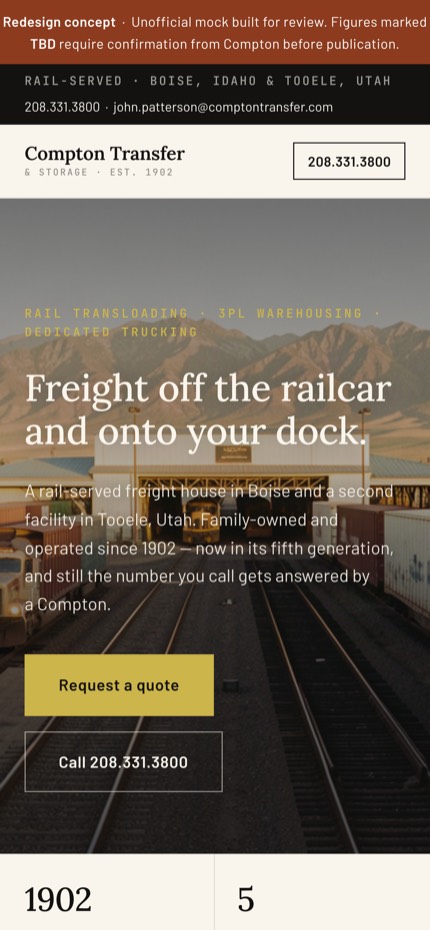
Mobile, at 390px
The live mobile hero clips its headline horizontally. The mock keeps the positioning line, the phone number and the quote CTA all above the fold on the same viewport.
The whole page, end to end
Scroll either column. The live page runs hero → service tiles → about → generic contact. The mock runs hero → proof → services → facilities → heritage → qualifying quote — so that every scroll depth has a next action and the page ends in a form that can actually be priced.